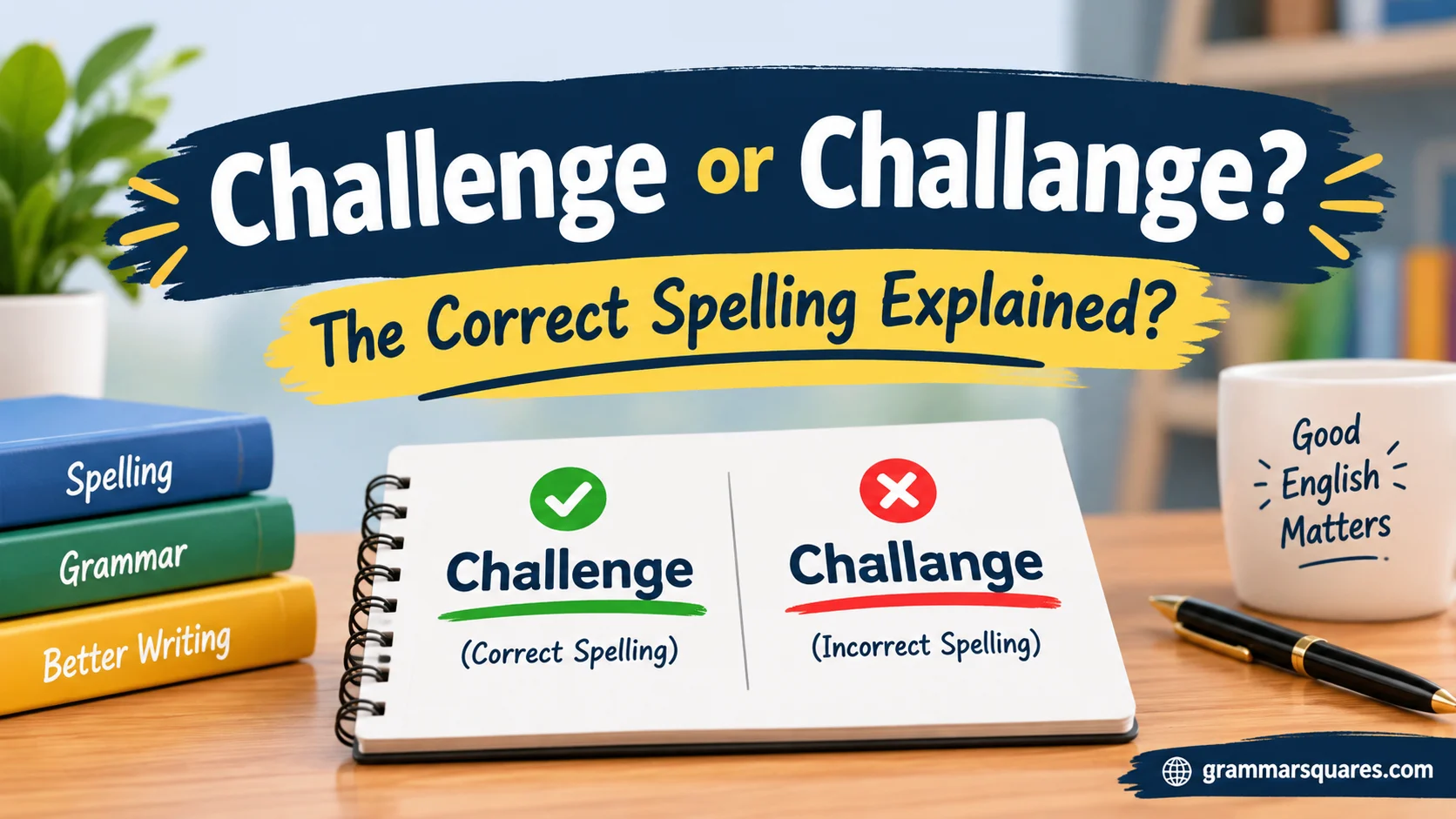

When it comes to English spelling, even simple words can sometimes cause confusion. One common example is Challenge vs. Challange. Both spellings may look similar, but only one is correct in standard English. Whether you are writing an email, completing a school assignment, or creating professional content, using the right spelling helps make your writing clear and effective. Understanding this small difference can improve your writing skills and help you avoid common mistakes.
The correct spelling is Challenge, which refers to a difficult task, a demanding situation, or something that tests your abilities and determination. On the other hand, Challange is a misspelling and is not accepted as the standard form in English dictionaries. Many people accidentally write “Challange” because they confuse the vowel sounds or follow an incorrect spelling pattern. However, learning the correct spelling is quite simple when you understand how the word is formed. Remembering the correct version can help you write with greater confidence in everyday situations.
In this article, we will explain the difference between Challenge and Challange with clear definitions, useful examples, and simple explanations. You will learn why Challenge is correct, why Challange is incorrect, and how to remember the right spelling without difficulty. We will also explore the word’s meaning, its use in daily conversations, and its role in formal writing. Whether you are a student, a teacher, a blogger, or someone improving their English, this guide will help you avoid spelling errors. By the end, you will feel more comfortable using Challenge in your sentences, emails, and other forms of writing.
Challenge or Challange — What Is the Correct Spelling of Challenge?
Let’s start with the direct answer.
The correct spelling is:
challenge
The incorrect version is:
❌ challange
Even though “challange” looks like it could be correct, English does not recognize it in any standard dictionary.
Trusted references like Merriam-Webster and Cambridge Dictionary only list “challenge” as the valid form.
Simple truth you can rely on
- “Challenge” = correct spelling
- “Challange” = spelling error
That’s it. No exceptions.
What Does “Challenge” Actually Mean? (Challenge Meaning Explained)
Before diving deeper into spelling, it helps to understand the word itself. When you know meaning clearly, spelling becomes easier to remember.
The word challenge works in two main ways:
As a noun
A challenge is something difficult that tests your ability.
Examples:
- Learning a new language is a challenge.
- Climbing a mountain is a physical challenge.
- Solving complex math problems can be a mental challenge.
As a verb
To challenge means to question, confront, or dispute something.
Examples:
- I challenge your opinion.
- She challenged the decision in court.
- They challenged the rules of the game.
Quick meaning breakdown
| Form | Meaning | Example |
| Noun | A difficult task | “This exam is a challenge.” |
| Verb | To question or dispute | “I challenge your claim.” |
Why “Challange” Is Incorrect in English
At first glance, “challange” feels natural. Your brain almost wants to accept it. But English spelling doesn’t support it.
The key issue
English does not use “-ange” in this word family structure. The correct ending is “-enge.”
That’s why we have:
- challenge
- change
- manage (different root, but similar confusion pattern)
“Challange” appears because the brain tries to simplify spelling based on sound. When spoken quickly, the middle syllable blends, and people assume an “a” fits better.
But dictionaries do not recognize it.
Official dictionary position
- Merriam-Webster: challenge ✔
- Cambridge Dictionary: challenge ✔
- Oxford Learner’s Dictionary: challenge ✔
- challange ❌ not listed
That alone settles it.
Why People Misspell “Challenge” as “Challange”
This mistake is more common than you might think. It doesn’t come from laziness. It comes from how the brain processes sound and spelling patterns.
Here are the real reasons:
Sound-based spelling confusion
People often spell words the way they hear them. When spoken quickly, “challenge” can sound like:
“chal-lange”
That “ange” sound tricks writers into adding an extra “a.”
Overgeneralization from English patterns
English has many words ending in “-ange”:
- arrange
- strange
- exchange
- change
So the brain tries to apply the same pattern to “challenge,” even though it doesn’t belong there.
Typing speed and autocorrect habits
Fast typing leads to small errors that go unnoticed.
On mobile keyboards, “challange” often slips through because:
- It still looks visually close to correct
- Autocorrect sometimes fails to flag it
- People read what they expect to see
Lack of visual memory
Many people have never consciously studied the word. They recognize it in reading but never memorize its exact structure.
So when writing, they guess.
Easy Way to Remember the Correct Spelling of Challenge
You don’t need complicated grammar rules. A simple memory trick works better.
Break it into parts
Think of it like this:
chal + lenge
Now focus on the ending: -lenge
That ending is the key.
Memory hook technique
Try this:
“A challenge helps you change.”
Both words are connected:
- challenge
- change
This association strengthens memory.
Visual trick
Imagine the word as a staircase:
chal
lenge
The second part “lenge” steps down like a landing point. Once you see it visually, you stop defaulting to “-ange.”
Read More: Ways to Say “I Am Honored” With Examples
Real Examples of “Challenge” in Everyday Use
Understanding usage helps lock spelling into memory. Let’s see how the word appears in real contexts.
School and learning
- Completing homework on time is a challenge.
- Students face challenges in mathematics and science.
Workplace
- Managing deadlines is a daily challenge.
- She enjoys the challenge of leadership roles.
Fitness and lifestyle
- A 30-day fitness challenge builds discipline.
- Running a marathon is a personal challenge.
Social media trends
- “Ice Bucket Challenge”
- “10K Steps Challenge”
- “No Sugar Challenge”
These trends made the word extremely common in modern digital culture.
Challenge as a Word with Dual Identity
One interesting thing about “challenge” is its flexibility. Few words shift roles so easily between noun and verb.
Comparison table
| Usage Type | Sentence | Meaning |
| Noun | “The project is a challenge.” | Something difficult |
| Verb | “I challenge your idea.” | To question something |
| Adjective form (related use) | “Challenging task” | Describing difficulty |
This flexibility is why the word appears so often in English communication.
Common Words Confused with Challenge or Challange
If you struggle with “challenge,” you’re not alone. English has several similar-looking words that cause confusion.
Confusion table
| Word Pair | Common Error | Correct Form |
| challenge / challange | very common | challenge |
| change / chnage | typing error | change |
| manage / manange | spelling slip | manage |
| exchange / exhcange | keyboard swap | exchange |
| strange / strang | missing letters | strange |
Notice a pattern? Most mistakes come from misplaced vowels or skipped letters.
Why English Spelling Feels Confusing
English is not a phonetic language. That means words are not always spelled the way they sound.
For example:
- “through” ≠ “thru”
- “enough” ≠ “enuf”
- “knife” ≠ “nife”
“Challenge” fits into this same category. You cannot rely on sound alone.
Simple truth
English spelling often preserves history rather than pronunciation.
That’s why memorization matters more than guessing.
Fun Fact About the Word “Challenge”
The word “challenge” comes from Old French “chalenge”, which originally meant accusation or dispute.
Over time, English reshaped it into its modern meaning:
- A test of ability
- A difficult task
- A call to compete or question
Language evolves slowly, but spelling often keeps older structures.
That’s why “challenge” ends with -enge instead of the more predictable “-ange.”
Quick Summary Table (Challenge or Challange)
| Feature | Challenge | Challange |
| Correct spelling | ✔ Yes | ❌ No |
| Found in dictionaries | ✔ Yes | ❌ No |
| Common usage | Very high | None (incorrect) |
| Meaning | Difficulty or dispute | None |
| Recommended use | Always | Never |
Common Mistakes People Make With “Challenge”
Even after learning the correct spelling, mistakes still happen. Here’s what to watch for:
1. Double-letter confusion
Some people add or remove letters incorrectly:
- chalenge ❌
- challange ❌
- challenge ✔
2. Silent proofreading bias
Your brain auto-corrects mistakes when reading your own writing. You may not notice “challange” even after rereading.
3. Autocorrect overconfidence
Sometimes people rely too heavily on spellcheck. But not all tools catch every error, especially in informal writing.
Simple Practice Exercises to Lock It In
Try these quick drills:
Fill in the blank
- This exam is a ___ (challenge / challange)
- I want to ___ you to a game (challenge / challange)
Correct the spelling
- challange → __________
- chalenge → __________
- challenge → __________
Sentence rewrite
Rewrite correctly:
- “I accept your challange.”
Correct version:
- “I accept your challenge.”
Final Takeaway: Challenge or Challange?
Here’s what you should remember without overthinking it:
- The correct spelling is challenge
- “Challange” is always incorrect
- The correct ending is -enge, not “-ange”
- The word describes difficulty, effort, or competition
Once you lock this pattern into memory, you won’t second-guess it again.
Think of it this way:
Life throws challenges at you, not challanges.
Conclusion:
The difference between Challenge and Challange is simple but important to understand. Challenge is the correct spelling in standard English, while Challange is a common spelling mistake. The word Challenge refers to a difficult task, a demanding situation, or an opportunity to test your skills and abilities. Using the correct spelling makes your writing more clear, professional, and accurate.
Remember that Challenge is the only accepted standard spelling, whether you are writing an email, completing an assignment, or creating blog content. By practicing the correct spelling and using it in everyday sentences, you can improve your English writing skills and avoid common mistakes.
FAQs
1. Which is correct, Challenge or Challange?
Challenge is the correct spelling in standard English. Challange is a misspelling and should be avoided in formal and informal writing.
2. What does the word Challenge mean?
Challenge means a difficult task, problem, or situation that requires effort, skill, or determination to overcome.
3. Why do people misspell Challenge as Challange?
People often write Challange because they confuse the vowel sounds or follow an incorrect spelling pattern. Regular practice can help prevent this mistake.
4. Is Challange ever considered a correct word?
No, Challange is not a standard English spelling. The correct spelling is always Challenge when referring to a difficult task or situation.
5. How can I remember the correct spelling of Challenge?
You can remember Challenge by focusing on the “enge” ending. Practice writing the word in sentences, such as “I enjoy every new challenge,” to help remember its correct form.




1 thought on “Challenge or Challange? The Correct Spelling Explained?”